
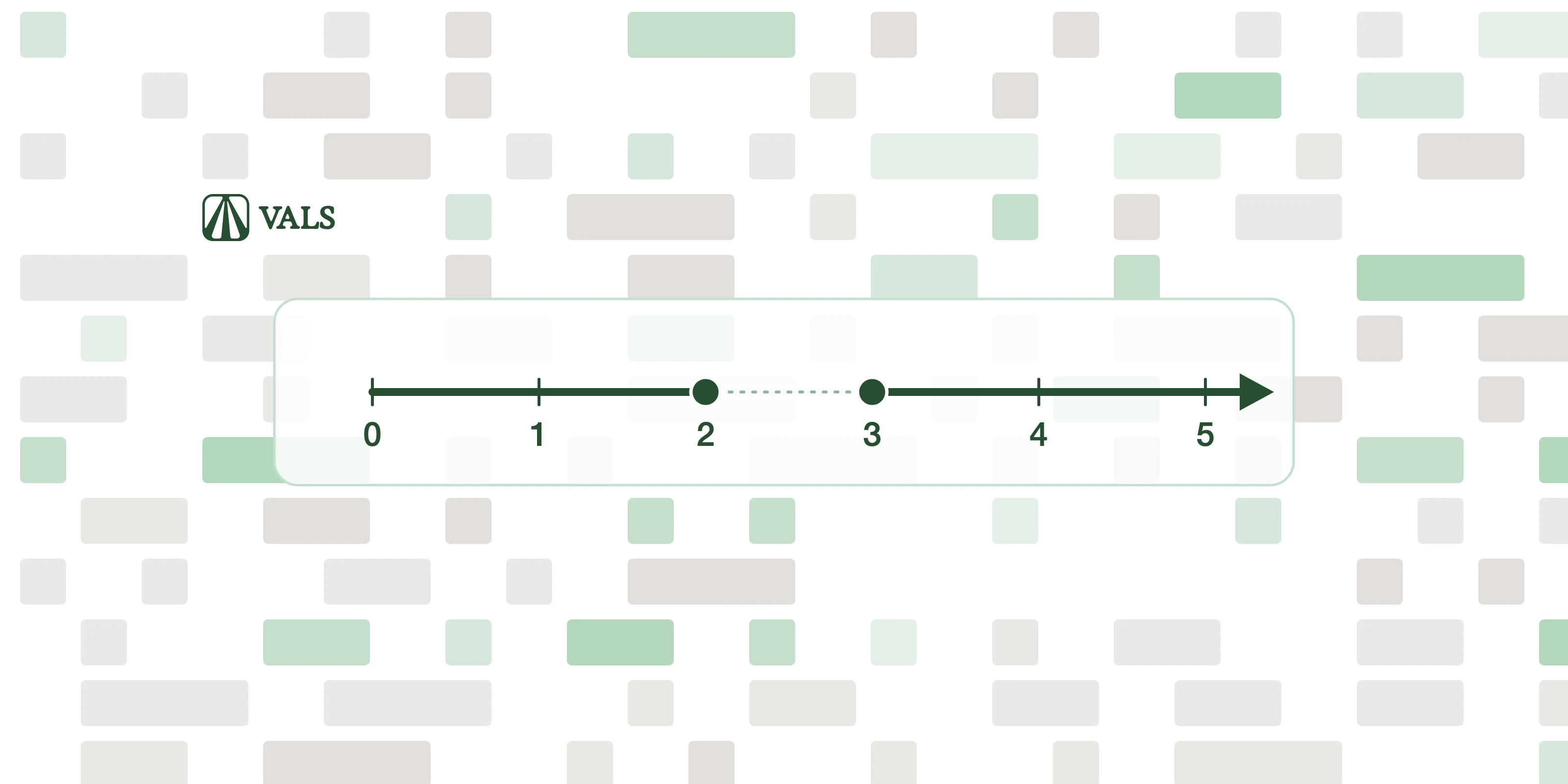
Of the 56 research-level formalization tasks on Autoform-Hard, exactly one separates the top of the leaderboard. GPT-6.2 Sol and Claude Fable 5.2 solve exactly the same 48 tasks. GPT-6.2 Astra also solves a 49th, and it is the only model on the board to do so: a 2006 theorem of Agata Smoktunowicz about the growth of graded algebras.
Not only is it the only language model we tested to formalize Smoktunowicz’s theorem, it’s also the only formalization we’ve ever heard of. Astra’s proof takes 94 minutes and about 1,800 lines of Lean, and after a shared opening it takes a different route from the published argument. Read the annotated proof here
The run
Astra worked alone in a sandbox with Lean, Mathlib and a shell, under Autoform-Hard’s limits of three hours and a $200 budget. No human touched it. The whole run cost $21.58 at Astra’s published price.
It nearly ended early. About 47 minutes in, Astra submitted a partial proof: complete for the easier, commutative case, but with a gap (a sorry) in the general one. The grader rejected it. Astra then filed an honest “unsolved” report, saying exactly what it had and hadn’t proved. Autoform-Hard doesn’t let a model give up until it has spent $20, and Astra had spent about $8, so the harness sent it back to work. It spent the next nine minutes thinking without writing any code, then started on a new approach. The grader accepted the full proof 39 minutes after the “unsolved” report.
How we checked it
Autoform-Hard accepts a proof only if it passes clean-room grading. The graded theorem is rebuilt from a trusted copy of the task, its statement must match the original exactly, and the proof may use only Lean’s standard axioms (propext, Quot.sound, Classical.choice). An independent kernel then replays the proof.
We also reviewed this proof by hand:
- It builds with no
sorryand no warnings, and depends only on the standard axioms. - The trusted task files are byte-identical to the originals.
- It uses no
native_decide, new axioms,unsafecode or redefinitions of benchmark objects. - The statement matches Theorem 1 of the paper, including the finite-dimensional degree-zero part.
This is a formal proof of Smoktunowicz’s theorem, not a formalization of her proof. The two coincide only in the opening steps.
How the proof works
The theorem is about how fast an algebra grows. Start from a few generators and count how many independent elements you can build with at most multiplications. Smoktunowicz proved that for one natural family of algebras, that count grows either no faster than about or at least as fast as about , never at a rate strictly in between.
Astra argues by contradiction. It assumes the growth rate lands in the forbidden range and shows that the growth must then be slower than assumed, which is a contradiction.
The published proof leans on three deep results from algebra and algebraic geometry. None of them is in Mathlib, Lean’s math library, and formalizing them would be a large project in its own right. Astra used none of them. Instead it defined a quantity it calls capacity: how much a space grows when multiplied by a fixed generating piece. Capacity behaves like the size of a boundary in a graph, and the rest of the proof is built on it.
Capacity has relatives in the research literature. We trace them in Hard Mode, below.
The annotated proof
We have annotated the full proof line by line. You can scroll through the Lean code with three layers of commentary:
- Code: what each declaration does.
- Thinking: what Astra was doing when it wrote it, reconstructed from the run log. Quoted reasoning comes from provider-generated summaries, not the model’s raw reasoning.
- Math: where each step sits relative to the published proofs.
Start with Capacity.lean, the heart of the argument; Hard Mode below walks through every file.
See where every model stands on Autoform-Hard. Thanks to the AutoformBench team at Meta FAIR for the benchmark, and to OpenAI for permission to publish the proof and excerpts from the model’s reasoning.
Hard Mode
From here on, this post is for readers who want the mathematics and a minute-by-minute account of the run. If you’re not a mathematician, this is a good place to stop.
How the proof REALLY works
Take an algebra over a field, generated by finitely many elements. Count the dimension of the space spanned by products of at most generators. If it grows like , then is the Gelfand–Kirillov (GK) dimension of , a standard measure of how big a noncommutative algebra is. A polynomial ring in variables has GK dimension .
For general algebras, GK dimension can be any real number from 2 up. Extra structure rules values out. Bergman showed that nothing lies strictly between 1 and 2 [KL00, Thm 2.5]. For algebras that are graded by the natural numbers and have no zero divisors, Artin and Stafford [AS95] ruled out GK dimension strictly between 2 and 11/5, and Smoktunowicz [S06] strengthened the result:
Theorem [S06, Thm 1]. A finitely generated algebra over a field that is graded by , has no zero divisors and has a finite-dimensional degree-zero part has GK dimension either at most 2 or at least 3.
The Lean statement in the benchmark has exactly these hypotheses. Experts wrote and audited it for Meta FAIR’s AutoformBench, independently of this run.
The proof is a contradiction. Assume the GK dimension lies strictly between 2 and 3. Then the space of everything up to degree grows faster than but slower than , so the single degree- piece, , grows faster than linearly but slower than quadratically. Astra then shows that slower-than-quadratic growth in fact forces linear growth. The first half sets up a division ring of fractions and follows known steps. The second half, the capacity argument, is where it leaves the published proof behind.
1. From GK dimension to counting dimensions
Vocabulary: the span of words of length at most in the generators, plus small facts about the benchmark's growth definitions.
Read the annotated code →Counting by word length and counting by grading degree give the same growth up to constants. This is where the finite-dimensional degree-zero part is used.
Read the annotated code →Restates the hypothesis in terms of : a GK dimension strictly between 2 and 3 means grows faster than linearly but slower than quadratically. The rest of the proof shows that is impossible.
Read the annotated code →2. Fractions
Because grows only polynomially, any two nonzero elements have a common multiple (the Ore condition), so embeds in a division ring of fractions.
Read the annotated code →Builds that division ring and, inside it, : the fractions with and of equal degree. The rest of the argument lives in .
Read the annotated code →Two tools: putting finitely many fractions over a common denominator, and a plateau lemma saying a slowly growing sequence must stall somewhere. The name is a fossil of an argument Astra later cut.
Read the annotated code →3. is generated by one piece
This section proves a known result, Artin and Stafford's [AS95, Thm 1.15], by a different contradiction.
The division ring generated by a subspace , and a criterion: if multiplying by less than doubles its dimension, then already lies in the division ring generates.
Read the annotated code →Conjugation by a homogeneous element is an automorphism, and generated division rings behave well under it.
Read the annotated code →Bookkeeping for words in generators of different degrees, with a pigeonhole argument on their total weights.
Read the annotated code →is generated, as a division ring, by one finite-dimensional piece . Artin and Stafford [AS95] derive this from common denominators; Astra derives it from growth.
Read the annotated code →4. The capacity argument
The heart of the proof.
For a finite-dimensional subspace , measure how much it grows when multiplied by , the piece from section 3 that generates : the defect . The capacity of is the smallest defect among subspaces containing . Astra shows that capacity behaves like the size of a boundary in a graph: merging two subspaces costs no more than the parts, and shifting by a nonzero element changes nothing. From this follows the fact the whole proof turns on: the elements that do not raise the capacity of form a division ring. So to control all of , it is enough to control a set of generators. The defect is the quantity in Zhang's volume difference inequality, which defines his lower transcendence degree [Z98, §1] and which he proposed as a route to this gap [Z98, Prop 8.6]; his Lemma 8.7 has a stabilizer argument of the same shape. Minimizing over larger subspaces, and the plateau argument built on it, are not there. The tools are also those of Hamidoune's isoperimetric method from additive combinatorics, which proves sumset bounds by studying the sets that minimize growth; Lecouvey adapted it to subspaces of division rings [L14]. Astra wrote all 25 declarations in a single command 75 minutes into the run, and the file compiled after one round of fixes.
Read the annotated code →Runs the capacity along the growing pieces . It cannot rise at every step, since that would force quadratic growth, so it plateaus. At the plateau, the division ring from Capacity.lean contains the generator , hence all of .
5. From a plateau to linear growth
Combinatorics of words: cutting a homogeneous word at a letter of bounded degree, and which degrees occur at all.
Read the annotated code →The payoff: one finite-dimensional whose products grow by a bounded amount, uniformly in . At 172 lines, it is the largest file Astra wrote in one go.
Read the annotated code →A second division-ring lemma: the elements that multiply with bounded growth form a division ring, so again it is enough to check generators.
Read the annotated code →Turns bounded growth into , hence grows at most linearly. That contradicts Hilbert.lean.
6. The theorem
The graded theorem itself: a seven-line proof that strings the modules together and ends in that contradiction.
Read the annotated code →The workspace also contains Helpers.lean, an empty file that came with the task.
The formal proof is partly a known route and partly not. Its first half (growth of the graded pieces, the Ore condition, the degree-zero division ring , and being generated by one piece) matches standard steps and [AS95, Lem 1.6, Thm 1.15]. Its second half, the capacity argument that goes from subquadratic growth straight to a linear bound on , has no counterpart in [AS95], [S05] or [S06]. Its basic quantity does appear elsewhere: it is the volume difference behind Zhang's lower transcendence degree [Z98]. It takes the place of Bergman's Gap Theorem [KL00, Thm 2.5], the Small–Warfield theorem [SW84] and the Riemann–Roch argument [AS95, Thm 1.2], none of which is in Mathlib.
Published proofs (AS95, S05, S06)
- Graded ring of fractions and the Ore property, quoted from the literature [AS95, pp. 235–236], [S06, pp. 635–636]
- grows like [AS95, Lem 1.6]
- is finitely generated as a division ring, by [AS95, Thm 1.15]
- . Artin–Stafford get this for from a common-denominator estimate [AS95, Prop 1.4, Cor 1.5]. Smoktunowicz gets it for from generic elements, Lemma 3 and a dimension count on chains ([S05, Thm 1], for infinite with a transcendental element; [S06, Thm 3], all fields, over )
- Bergman's Gap Theorem [KL00, Thm 2.5] gives ; Small–Warfield [SW84] makes finite over a function field of a curve [AS95, p. 242]
- Then by Riemann–Roch [AS95, Thm 1.2], so
Formal proof (GPT-6.2 Astra)
- Known steps, re-proved: growth of , the Ore condition, and its degree-zero division ring (sections 1–2)
- Known step, proved differently: is generated by one finite-dimensional space (section 3)
- Not in the published proofs: capacity, built on the volume difference of [Z98]; a monotone, submodular, translation-invariant integer attached to subspaces of (section 4)
- Not in the published proofs: subquadratic growth forces a capacity plateau, whose stabilizer is a division subring containing (section 4)
- Not in the published proofs: a fixed with uniformly bounded expansion of ; bounded-expansion multipliers form a division subring; hence (section 5)
Where the two proofs touch
Where capacity comes from
The closest relative we know of is J. J. Zhang’s lower transcendence degree [Z98], an invariant of division rings built on the same quantity and proposed as a route to this very gap. Astra’s reasoning summaries mention “lower transcendence” in the first minutes of the run. The argument also resembles Hamidoune’s isoperimetric method from additive combinatorics, which Lecouvey adapted to division rings [L14]. If you know how this route relates to the existing literature, we’d love to hear from you at jacob@vals.ai.
The run, broken down
By runtime
Hover over a segment to see what Astra was doing.
By file
One dot per moment at which new declarations appeared in a file. Select a dot to open the file at that declaration. Hollow dots are files that were later deleted.
References
- [AS95]
- M. Artin and J. T. Stafford, Noncommutative graded domains with quadratic growth, Invent. Math. 122 (1995), 231–276.
- [KL00]
- G. R. Krause and T. H. Lenagan, Growth of Algebras and Gelfand–Kirillov Dimension, revised edition, Graduate Studies in Mathematics 22, American Mathematical Society, 2000.
- [L14]
- C. Lecouvey, Plünnecke and Kneser type theorems for dimension estimates, Combinatorica (2014). arXiv:1109.0134
- [S05]
- A. Smoktunowicz, The Artin–Stafford gap theorem, Proc. Amer. Math. Soc. 133 (2005), 1925–1928.
- [S06]
- A. Smoktunowicz, There are no graded domains with GK dimension strictly between 2 and 3, Invent. Math. 164 (2006), 635–640. Springer
- [SW84]
- L. W. Small and R. B. Warfield Jr., Prime affine algebras of Gelfand–Kirillov dimension one, J. Algebra 91 (1984), 386–389.
- [Z98]
- J. J. Zhang, On lower transcendence degree, Adv. Math. 139 (1998), 157–193.